

TV OYOMINTO NEWS
Three years after the Hamas-led October 7, 2023 attack, the trauma of that day has become the defining issue of Israel’s political contest.
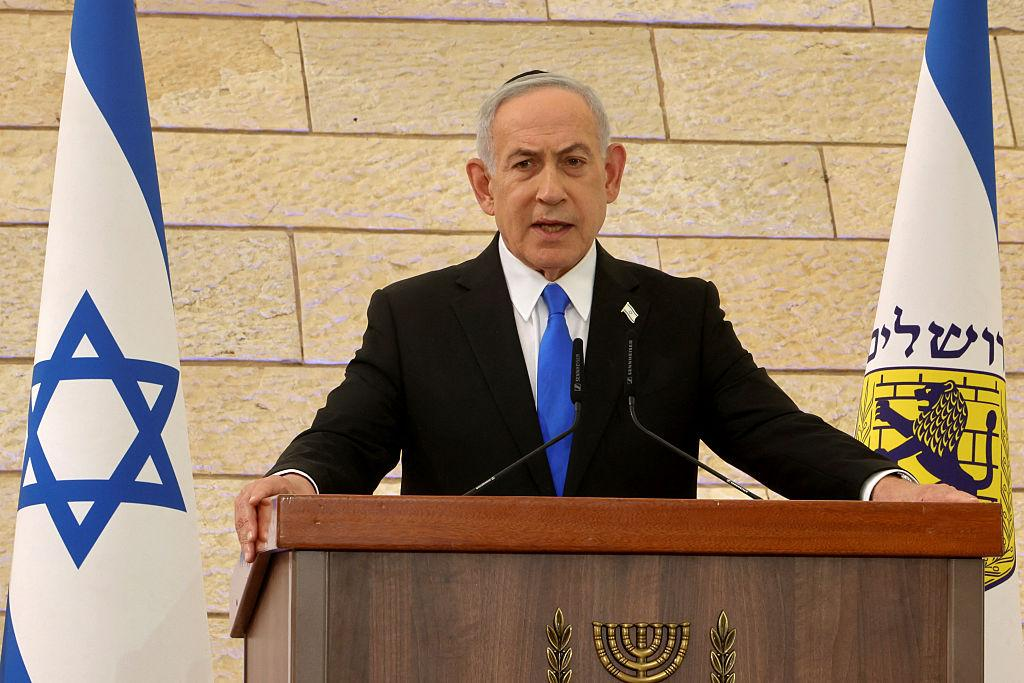
Israel is preparing for a national election on October 27, and Prime Minister Benjamin Netanyahu is facing perhaps the most consequential political test of his career.
Almost every major campaign is being shaped by the events of October 7.
For Netanyahu’s opponents, the attack represents a catastrophic security failure for which the government must accept responsibility. For the prime minister and his supporters, it is part of a broader story of Israel surviving an unprecedented assault and fighting back against its enemies.
The political divide is therefore not simply about policy.
It is about responsibility.
Around 1,200 people were killed during the Hamas attack, while 251 people were taken hostage, according to Israeli figures cited by the Associated Press. Israel subsequently launched a military campaign in Gaza that has caused enormous destruction and tens of thousands of Palestinian deaths, according to Gaza health authorities.
The conflict has transformed Israeli society.
Families have lost relatives. Soldiers have died. Hostage families have spent years demanding answers. Communities near Gaza have been deeply affected, while the country’s relationship with the international community has become increasingly strained.
For Netanyahu, the election is effectively a referendum on his leadership.
His opponents argue that the government failed to prevent the October 7 attack and that the political leadership must answer difficult questions about what happened before, during and after the assault.
The opposition has called for an official commission of inquiry.
Netanyahu has resisted such calls while repeatedly defending his record and shifting responsibility toward security officials.
His principal challenger, former military chief Gadi Eisenkot, has positioned accountability at the centre of his campaign.
Eisenkot himself has personal experience of the war, having lost his son and nephew in combat in Gaza. His political movement has promised what it describes as a process of national repair and reconstruction.
The election is therefore being fought against a backdrop of grief.
Victims’ relatives have entered politics. Former military officers have joined competing parties. Families who lost loved ones on October 7 are seeking parliamentary seats.
The result could determine whether Netanyahu remains at the centre of Israeli politics or whether a new leadership emerges.
Yet one striking feature of the campaign is what is not being discussed.
The humanitarian situation in Gaza receives comparatively little attention in Israeli political debate. Palestinian statehood and long-term peace also remain secondary issues compared with security and accountability.
That reflects how deeply October 7 has reshaped the political landscape.
For many Israeli voters, the attack remains a personal memory rather than a distant historical event.
It influences how they view security, military policy, leadership and the country’s future.
Polling cited by the Israel Democracy Institute indicates that more than 60 percent of Israelis consider their attitudes toward October 7 an important factor in deciding how they will vote.
But the same trauma is producing different political conclusions.
Some voters see Netanyahu as the leader who protected Israel through years of conflict.
Others see him as the leader who was in power when the country’s most devastating security failure occurred.
That makes the coming election unusually personal.
For Netanyahu, victory would represent a remarkable political recovery.
For his opponents, defeating him would open the door to a new political chapter and potentially a formal reckoning over October 7.
Whatever the outcome, the election will be shaped by an event that has already transformed Israel.
The ballot box may determine who governs the country.
But October 7 has already changed the political conversation for years to come.
Comment here