

By Brian Angwenyi, Oyominto TV
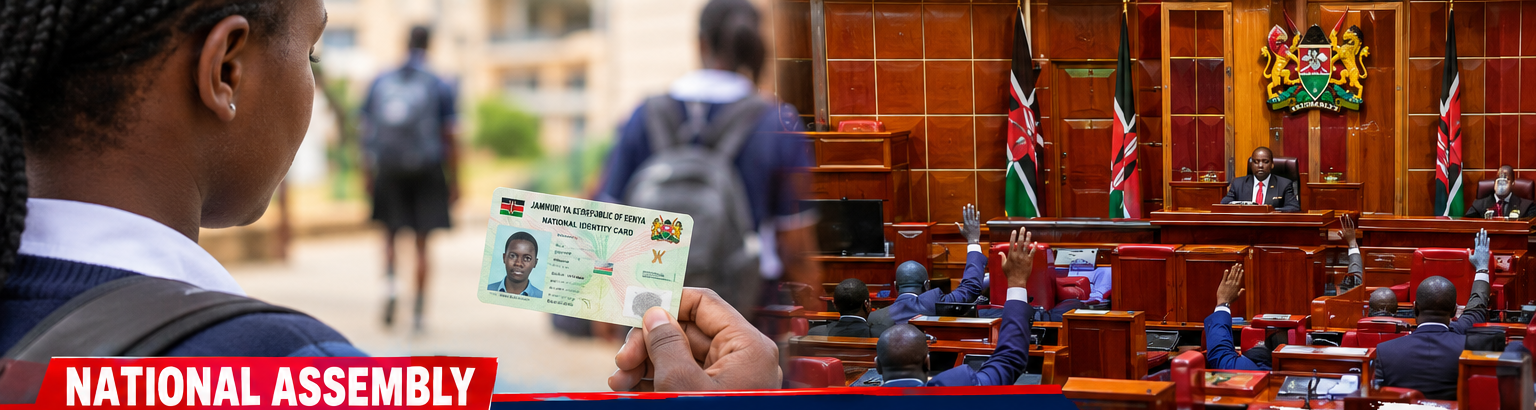
The National Assembly has rejected a proposal that sought to make it easier for secondary school students who turn 18 to obtain national identity cards and register as voters before leaving school.
The proposal, contained in the Registration of Persons (Amendment) Bill, 2025, was intended to establish a structured national registration programme targeting eligible students in secondary schools. The Bill was sponsored by Suba South MP Caroli Omondi, alongside Wanjiku Muhia, according to parliamentary records.
Under the proposed arrangement, the Principal Registrar would conduct registration exercises in secondary schools every year. Students who had reached the legal age of 18 would have their details collected during the registration period, with the process running through the school calendar.
The proposed legislation also sought to ensure that eligible students received their identification cards free of charge. The documents would either be delivered to their schools or made available at designated collection points for students who had already completed their studies.
The proposal was partly aimed at addressing challenges faced by young people immediately after completing secondary education. An identification card is often required when accessing important services, including processes linked to university placement and higher education financing.
The Bill also had potential implications for voter registration. The proposal was estimated to increase the number of newly registered voters by about one million annually, while making it easier for young people entering adulthood to participate in electoral processes.
However, lawmakers rejected the proposal after the National Assembly’s Administration and Internal Security Committee recommended that it should not proceed.
The committee raised concerns that carrying out mass registration exercises during the school calendar could interfere with learning activities. It also questioned the decision to focus specifically on secondary school students, arguing that such an approach could leave out other young people who are equally eligible for identification documents.
These groups include out-of-school youth, trainees in vocational institutions and people undertaking informal education, who would not benefit directly from a school-based registration programme.
The committee further argued that the existing law already provides for the registration of people who have attained the age of 18. In its view, the problem is not necessarily a lack of legislation but how the existing system is implemented.
Rather than changing the law, the committee proposed measures such as stronger public awareness, improved administrative systems, additional funding and better delivery of registration services.
The rejection therefore leaves the responsibility of ensuring that newly eligible 18-year-olds obtain identification documents with the existing registration system, while the broader challenge of bringing young people into the electoral process remains a policy and administrative issue.



Comment here